Showing posts with label Gamesmanship. Show all posts

Trainmanship – surviving the Leicester Elbow

Aficionados and practitioners of the gentle art of gamesmanship may be jubilant to note that per pro yours truly the art of survival in the busiest of public transport systems has officially been accepted recently and named “trainmanship” by the Greater Tokyo Old Rotters and Gentlemen Club as a subset of Japanmanship due to the increasingly huge, as yet unpublished, amount of research on the subject, quod erat faciendum. A feat worthy of celebration, I think you’ll agree.

* * *
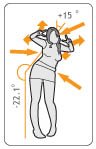
Recently I was in yet another altercation involving the Leicester Elbow. In the same way London’s Leicester Square somehow attracts tourists to flock to it despite any obvious charms or worthwhile attractions, so does an elevated elbow, say one in the middle of an arm holding a suspended strap for support, attract the heads of those around it for no discernable or comprehensible reason, hence the “Leicester Elbow”. (see figure A)

Fig. A The Leicester Elbow

In my most recent case a demure and possibly drunk old salaryman had decided to wage war on my elbow by, eventually, doing backwards head buts with such force the crack of bone on bone was audible through even my earphones. I felt no pain, of course, but was irritated enough to not make any more space for the belligerent lollygagger as all he had to do was take a single step forward, back to the space he had previously occupied, for my elbow to no longer be an obstacle. This, in turn, prompted the man to turn around to have a word with me.

After having sampled and tested all manner of offensive and defensive measures it would seem ignoring the perpetrator is by far the most effective, but only if you can communicate that you are, in fact, ignoring him. This requires a passive aggressive non-activity which can be hard to convey, but the Leicester Elbow forms a unique natural solution, which I had cause in this instance to test with astounding results.

In turning to me the perpetrator sought eye contact which I was unwilling to lend him, as it would invariably lead to a cul-de-sac of verbal abuse. Instead I continued to stare at my mobile phone and moved my elbow ever so slightly as to make it occupy the space in between our heads through which the conversation was to be conducted. Not deterred the drunk merely tilted his head sideways to peek past my elbow and to reinitiate possible eye contact. To answer this move, I merely shifted my elbow ever so slightly back and again successfully blocked him from my view, never once looking up. (see figure 2) The dance can theoretically be perpetrated ad infinitum but in this instance it was repeated four times before the man got the message and meekly turned to move to a different space, far removed from this aggressively unwilling victim.

Fig. 2 The Sandwich Waltz

The lesson learnt is that simply ignoring the wrongdoer will yield no reasonable results so actively ignoring him while communicating loudly you are doing so, as with the Sandwich Waltz, is proven to be effective.

As a side note, the tactic did eventually lead to the man changing his position to near where another passenger would give up his seat at the following stop, allowing for the aggressor to sit in comfort for the rest of the trip while yours truly remained standing. So maybe it was not a victory in comfort, if it was one in the moral sphere of commuter survival.

Gamesmanship - part 9

Know thine enemy

In previous chapters of this illustrious and indeed illustrated tome for the benefit of the gamesman in Japan, you have learned to deal with the native people and their ways in order to rise above them with the minimum of effort. Today we will examine that most loathsome of braggarts you may come across during your stay on these shores: the fellow countryman.

All your carefully constructed social positioning could come crashing down in the presence of someone of your own kind so every effort must be taken to establish immediate dominance over any and every intruder. Social superiority amongst expatriates in Japan relies on three distinct categories: longevity, employment and knowledge.

The first rule of social standing in Japan revolves around the number of years you have lived here and, more importantly, how many more you have lived here than your opponent. As this is a well-regarded social measuring tool it is not uncommon, upon introduction, to ask how long one has lived in Japan, so it is imperative you pose the question first. Whatever the reply is, you should chuckle knowingly and paternally, as if to fondly remember when you yourself were only here for so many years.
“10 years, you say? Haha, good lord. That’s quite a period, isn’t it? I remember my first decade well.”
Of course in the unfortunate event of being asked the question yourself before being able to gauge your opponent’s answer some wile may be required. To avoid giving a straight answer to which your opponent could unleash a rebuke of his own, you must wave the question aside, as if to indicate its irrelevance; when you have been in Japan as long as you have, of course, such trivial matters are of no consequence anymore.
“Oh my dear boy,” you heartily exclaim, “too long too long. I have stopped counting the years!”
Under no circumstances must you give an exact figure as confusion may arise during later meetings or when another person is introduced to you in front of your opponent.

Employment status too is an important indicator of class. Full-time employment at a Japanese firm is considered the highest honour, as opposed to, for example, part-time at a foreign company or English teacher. When the matter is broached the tactic is fairly simple. If your opponent is in a lower form of employment you must express jealousy.
“Oh, how I wish I was in your line of work. I don’t think the wages, stability and bonuses can ever justify the loss of freedom you must enjoy.”
Alternately, if your opponent finds himself a part of a Japanese firm, the opposite is required:
“Ah, the long hours, the frustration you must feel. I’m glad I have left that all behind me.”
In either case it must be made clear that your current situation is far preferable to your opponents’ and that your employment is a matter of choice rather than circumstance.

As for knowledge, the more intimate your acquaintance with Japan and its more obtuse cultural artifacts the higher you stand on the expatriate ladder. I find Stephen Potter, the originator and undisputed master of our craft, to have the best strategy, which works in Japan as well as it ever did back on the Isle, meaning of course the devastating Canterbury block. The simple phrase “but not in the South” can put a halt to any conversation your opponent might be engrossed in. For example:
“I found that the Kansai people are friendlier and more open than those in Kanto.”
“Ah, yes, but not in the south, of course.”
Or
“I find a well-prepared fugu sashimi to be infinitely more delicious than any toro or hamachi.”
“But not in the south.”
This phrase can be adapted slightly for more in-depth knowledge, as for example:
“I always found Takehiko Inoue’s bold characterizations speak directly to the Japanese consumer making his work incredibly popular.”
“Ah, but not that of his middle period, of course.”

With a few swift strokes and maneuvers the gamesman in Japan can as quickly establish dominance over his tiresome countrymen as he can over the native population. Of course, like the Canterbury block, most original gamesman techniques apply when sparring with a fellow Briton, but caution must be observed when conversing with the wide variety of the lesser couth foreigners that inhabit Japan alongside, or rather, below you. One can hardly expect an Australian or, Heavens forbid, someone from our American colonies to have the wherewithal to effectively receive an Oxford pincer or Wodehouse leg, so always observe the highest caution in your choice of techniques.

Gamesmanship – part 8

Unfathomable

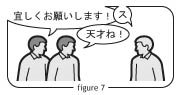
To be held in high regard as a native-level Japanese speaker whilst simultaneously keeping a haughty attitude isn’t quite as difficult as it may seem thanks to the gamesman’s version of the old playground favourite “well, if you don’t know I’m not going to tell you!”

To fully understand the Japanese is a bonus but not required; you simply pretend to listen and at choice moments in the conversation attempt to join in with a witty or poignant remark. You mutter a “well…” or “um…" and wait until the people in conversation turn to you with expectant glances eagerly awaiting your input. You then brush it off with a dismissive “nah…” or “um, no, nothing, forget about it” as if to say you thought better of it and decided to not bother anyway.
The result is that the people around you perceive you to be either very humble, as if you decided your remark was unworthy, or haughty, as if they were unworthy to receive the remark; either is a good reaction for the gamesman. Most importantly, though, they will conclude that you have been able to follow the conversation closely so therefore your Japanese must be of a very high level.
As you can imagine no actual Japanese skill is required, just a keen sense of timing, but people will go round telling others what a master of the language you are.

A slight variation of this is the subdued chuckle: simply observe the crowd talking and whenever more than a few of them burst out laughing it is a safe bet to assume something humorous has been said. At this point, even this late in the proceedings, you should let slip a subtle “heh” to show you did understand the joke, even if you didn’t, and that, though slightly amusing, it wasn’t quite funny enough for you to guffaw at. The effect on the targets is similar to the technique above; they will think your Japanese is good enough to get the joke, but they will need to try harder if they wish someone in your high position to appreciate it fully. You are after all a serious and sophisticated foreigner and not laughing out loud at the jokes shows them what a base sense of humour they have.

The advanced gamesman may litter these tactics with a sprinkling of “so desu ne!(“Isn’t it just!”) or “so ka? (“You don’t say!”) remarks but be aware that the chances of being found out increase, especially if you have no inkling as to the general slant of the conversation.

Before long your perceived skill in the Japanese language will be legendary.

A complete guide to becoming a talento

Women who are thinking of becoming comediennes should forget it and remember their place in society. Though occasionally a woman can make it in comedy, these women are strange and will never find themselves a suitable husband. Women have a place on television and that place is next to the presenter, as eye-candy or simply to be laughed at or be helpless.

Firstly you have to be either cute or have big breasts. To be both easy on the eye and busty is the ideal but either is fine. Neither is unacceptable and a career as an office lady awaits you until you snag a husband at which point you can become a professional shopper; but television is not for you.

To start your first step towards talentodom you will probably have to do some photo shoots for teenager magazines or titillation books for middle-aged men. Don’t be shy;. you can wear tiny bikinis to cover your shame until you’re old enough to bare all (18). At this point you must hope to be spotted by some television or music producer.

If you get invited to appear on television you must master the most important aspect of talentodom: the Pose. Bend out your hips sideways, bend your neck as if you’re trying to peer under your bed while standing upright and do the two-fingered wave with both hands all the while keeping a toothless grin on your face. If the grin starts to hurt you can also do a pout on occasion. If you master this Pose your route to talentodom will be a quick and easy one!
If, God forbid, you have to speak on television, maybe give your opinion on some food on a panel show or something, be sure to affect a childrens’ manga voice. Men like high-pitched voices like those of a four year old.

At some point in your career you may want to release a single. Even if you can’t sing, don’t worry about it too much. The most important thing is to meet some producers or video directors so you can marry one.

By the time you have flashed your bosom and pouting face on television a few times you can fall into the panel-show routine. Once you get older and your looks fade and sag there are a few routes you can follow. Stick with the panel shows. People will get used to seeing you there and don’t mind so much that you’re now undesirable. Occasionally you can even participate in retrospective shows about how cute you used to be, and that one song you released before marrying the video director. Alternatively, you can age gracelessly and surgically enhance your bosom to outrageous proportions. It may be uncomfortable but at least it’ll give the public something to stare at and hopefully forget how talentless you are. Or you can start a range of beauty products; even if your face won’t launch a half-dozen ships anymore, you can always sell it on the strength of your former beauty.
At all times, though, remember the pose and the child’s voice!

Good luck with your career as televisual eye-candy for the masses! Do not underestimate the importance of the role! Talentos fulfill a very useful task on television as they strut their stuff and pout at the camera while the announcer goes through the list of sponsors. They also fill seats on panel-shows, and without those the world as we know it would not be able to sustain itself.
Go forth, proud fleshpot and remember to bend forward occasionally!

A complete guide to Japanese comedy

To fully appreciate, understand and become a Japanese comedian there are a few simple steps you must follow.

Step 1: Choose a partner and assign roles
Though not exclusively so, Japanese comedy works best as a duo. Find someone equally broke and desperate for fame as you and pair up. One of you needs to be the straight man, the other needs to be the straight man who occasionally hits the other straight man. A roll of the dice or a game of rock, paper, scissors is good enough a method as any to decide on this.

Step 2: Choose a prop
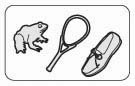
You can’t have good comedy without a prop. One will be enough. It doesn’t really matter what the prop is, as it won’t be the source of the comedy but merely an item you will hopefully be identified with. It can be any household item, any form of female clothing (women should read the upcoming “guide to becoming a talento” and steer clear of comedy), any kind of homosexual leather gear, etc.

Step 3: Choose a name
This part is easy. Check your driver’s licenses. The entry under “name” can be the name of your act. Or, if you’re avant-garde you could choose to be identified with the name of the prop you chose.

Step 4 Choose a punch line
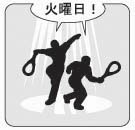
This is actually a two part process. First you need a line; this can be anything and shouldn’t really refer to anything else. Choose something like “Fol-de-rol and a hey nonny nonny”, “Eisenhower was my uncle” or “Tuesday is pick-up day!” Memorise this line because you will need to repeat it often.
Secondly you need to invent a silly dance step. Just wave your arms about and make a few steps left and right, but make sure it ends in a pose, which you can hold as the audience is wiping away their tears of laughter.

Step 5: The act
Get invited to a television studio, like for example a new comedians’ debutant show. Start the act by saying something apt relating to a current event or, preferably, some talent present in the studio. This could be something like “Look, Presenter-san is wearing glasses; glasses and a blue suit!” or “Today ex-prime minister Koizumi-san visited the dentist!” or better yet “I don’t like Ramen!”
Follow this up immediately with your punch-line and silly dance, remembering to end in a pose. Bask in the howls and shrieks of laughter from the audience and presenters.

Step 6: Fingers crossed
Pray to your God that people will pick up on the punch-line! Try to get invited to as many panel-shows as possible. Make sure you are dirt cheap so you can be hired to sit in when more important guests drop out in favour of competing in quiz shows, and important task which can’t be left to members of the public..

Step 7: Build a career
If you are lucky enough people will be quoting your catch phrase. At this point you will be invited to do commercials, television shows, PR events and supermarket openings as long as you use your special dance and punch-line at every opportune moment.


Step 8: Enjoy your retirement
After three months of glory and fame the public is ready for the next big thing. You can now enjoy an easy retirement as a judge on shows for other debutant comedians or a guest on panel-shows about restaurants. If you’re lucky you may even be sent out to taste food in restaurants for other panel-show members to watch and get excited by.

Congratulations! You now have all he knowledge you need to become a successful Japanese comedian!

Gamesmanship - part 7

The Urban Ninja

If there is no one in front of you, it is you who is holding up the traffic."
- Auberon K.


The historical and traditional martial art of Urban Ninjaism has been with us since the closing years of the last millennium, so it is hard to imagine there are still people out there who have never heard of it. Though it originated as a hobby to see who could maneuver his way from one end of Oxford Street to the other in the fastest possible time without touching any of the crowds, it was solidified into a sport by the writing of “The Urban Ninja Handbook” (Harpie Cullings) by my close friend, fellow gamesman and philosopher Auberon K. It has since dominated the world of global competitive sportsmanship surpassing even that of three-fingered chess and the controversial espresso croquet sessions.

As was pointed out at a recent expatriate gamesman appreciation evening at the club, with our genetically longer legs and massively more important lives we obviously move much faster than the natives and a such the art should find natural expression in Tokyo. And so I set out to rewrite the rulebook to include specific offensive and defensive techniques and moves that can be utilized with great success on the busy streets of Tokyo.

These following extracts must be preceded by a reminder of the very basics of the sport; the combatants must never touch, physically, though props may be used as defensive weapons though never directly against another person. The opponent must not become aware he is embroiled in a bout of Urban Ninjaim. No one talks about Urban Ninjaism.

The striking cobra

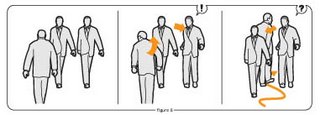
This first offensive technique has proven very popular in the motherland and loses nothing of its effect when transposed to the surroundings of Tokyo inner-city street life. When confronted by an oncoming wall of at least two opponents the Urban Ninja must create an opening to pass through. The combatant braces himself by turning his right shoulder (or left for the sinister) towards one of the oncoming targets. This aggressive move heralds an inevitable clash for which the Urban Ninja has prepared himself, alerting the opponent and forcing a defensive pose; he will turn away his right shoulder to deflect the blow. This creates a gap in the wall which the combatant should be able to slip through with a quick turn of the left shoulder and a rapid right-left sidestep before the opponent realises he will not be harmed.
If anything this move is slightly more effective over here as it plays on the stereotype that all foreigners are aggressive and rude.

The empty-handed Samurai
The sound of umbrellas opening is like the cocking of a thousand muskets, each aimed squarely at my eyes." – Auberon .K.

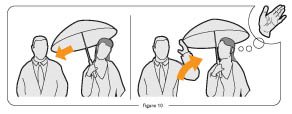
This defensive move saves face, and your eyes. With our naturally tall and noble stature we stick head and shoulders above most crowds and so navigating a busy street in the rain can be a dangerous pursuit as the metal tips of umbrellas are at eye-level.


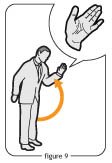
For this technique we utilize a common piece of Japanese body language. When wanting to pass through a group of people a Japanese person conveys the whole of “Excuse me, old chap, but if you wouldn’t mind so terribly I’d like to pass and as you can see I am totally unarmed and pose no threat to you” with a simple karate-chop pose; holding the flat hand out in front of you, fingers pointing upwards; this apparently shows you are indeed not carrying your sword. To this day it is used by anyone wanting to squeeze through a narrow gap or break apart a duologue. (see figure 9)
It is utterly shameful to use such easy tactics as an Urban Ninja of course, but it does serve a purpose. When in imminent danger of having your eyes poked out by the sharp umbrella of an unsuspecting opponent, moving it away with your flat hand provides safety. The opponent will be surprised but when checking to see what he commotion is about will spot your open hand and interpret it as the common, polite hand gesture.

The deflecting sword

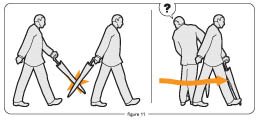
When the season is wet many people carry around their umbrellas, but some do so with less care than others, swinging it about freely and without hesitation. Though initially a danger it can be used as a diversionary tactic if the person is to be passed by quickly. Remembering never to touch an opponent, simply tap the umbrella from the inside. Thinking he may have harmed someone the opponent will turn around to check what has happened giving you the opportunity to slip past, taking care to avoid the offending umbrella. Tapping the umbrella from the outside will cause your opponent to turn in your direction instantly giving away your position and strategems; this is to be avoided!


As you can see the art of Urban Ninjaism enjoys a rich and diverse series of tactics and techniques. Though most are universally applicable, some are particularly useful in Japan. The next time you traverse a busy street in a hurry, why not practice some of these maneuvers always taking care not to make bodily contact or to alert the opponent he is involved in one of the richest, most historic martial arts ever to enjoy such wide popularity.

Gamesmanship - part 6

S is for Japanese

The amateur gamesman, new to Japan and its language, has little problem coaxing compliments out of the natives by virtue of his low-level Japanese abilities. Merely saying “hello” or “thank you” in Japanese is enough to illicit gasps of awe and much back slapping. Once your Japanese ability increases however, so does the level of criticism to the extent that you won’t receive any compliments until you are a native level speaker.

For the gamesman with a mid level grasp of the language there are some techniques to exude an image of being “pera pera”, which means “fluent”, without actually being so.
Many of the traditional exclamations and greetings used on a daily basis end with the syllable “su”; like “ohayou gozaimasu”, “yoroshiku onegaishimasu”, “shitsurei itashimasu”, etc.You will find however that the Japanese focus all the emphasis on the last syllable while skimming over the rest of the word. So by mumbling incoherently and ending with a sharp “S” sound you can pretend you are offering the correct greeting or response to any situation even if you’re not sure which it is.

See for example:
“Excuse me, Mr. Gaijin-san, can I pass?”
“shmbluhmmlSS!"

"Ah, Mr. Gaijin-san. I have some important work I need you to do by tomorrow!"
"ohuhuhummushuSS!"
"Oh well, maybe someone else can..."

The added bonus is that mumbling like this is slightly haughty and will thus dissuade the recipient from engaging you in further conversation, leaving in stead with the impression of having talked to a master of the Japanese language. They will talk about how good your Japanese is behind your back simply by accentuating the "S” and not much else besides.

Gamesmanship - part 5

Sarcastic? Moi?!

Considering their long-lasting love affair with all things American it is rather appropriate that the Japanese do not grasp the concepts of irony and sarcasm. Both being mainstays of British social intercourse in Japan they merely confuse and confound and hence are powerful weapons in the gamesman's arsenal.

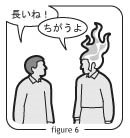
When confronted with obvious or rhetorical questions be sure to answer sarcastically or ironically. E.g. if you’ve been to the hairdresser’s and a colleague asks “Oh, you’ve been to the hairdressers” simply answer “no, I haven’t!” Your colleague will be honestly confused with your answer as it is obvious to him you have had your hair cut.
Let the matter rest for a while and bring up the subject a little later. “I read in a magazine, while I was at the hairdresser’s yesterday, that…” Your colleague will probably not take you up on this but you can rest assured you have portrayed yourself as a mysterious and unfathomable foreigner who stands had and shoulders above the cross-cultural incompetence of your target.

Gamesmanship - part 4

The smell of the new

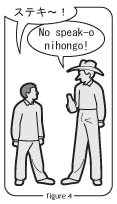
It is sometimes remarked upon by foreigners traveling in Japan that the seat either side of them on crowded trains remain unoccupied. It is often mistakenly believed to be due to racism. It is in fact due to the morbid fear by the Japanese to be confronted with a situation in which they may be forced to speak English and thus embarrass themselves. The gamesman exploits this fear at all times to be assured comfortable transportation.


When traveling on trains the professional gamesman will exude an air of trourism by wearing the right apparel, shorts, T-shirt, sandals, sunglasses, and by appropriate actions, staring at the rail map above the doors, craning around at each stop to see which station he is at, by reading tourist guides and maps. At all times the gamesman must hide his mobile phone or act with standard Japanese commuter manners: sleeping, ignoring others, reading manga.
By showing the unlikelihood of Japanese speaking ability no Japanese person will dare sit next to you thus making sure you will have a spacious, comfortable ride.

A warning to the amateur gamesman: if you play this part too well you run in danger of being approached by a helpful commuter offering his services and help. At this point it may be useful to have studied some non-English sentences for "I'm sorry, I don't understand", be it Dutch, French, German or preferably Italian. This is no guarantee that the person won't try his damnest to help you out though, and thus this technique is only recommended for professional gamesmen or those with a lot of spare time on their hands.

Gamesmanship - part 3

I am Jack's textbook racial stereotype

The best state of mind for a gamesnman's opponent is a confused sense of confidence. If the target feels assured and correct it puts the gamesman in a better position. One way to accomplish this is to play into the deep-rooted sense of racial stereotypes the Japanese have towards Westerners. Validate their misconceptions to your own advantage.

At the airport check-in desk ask for a seat next to the emergency exit because your legs, I don't know, must be longer than those of the Japanese or something. The check-in clerk will instantly realise that this is true, because all Japanese know Westerners have longer legs; it is common knowledge for them! Thanks to the vindicated smugness of the clerk a seat next to the emergency exit is almost guaranteed.

Non-smokers may want a particular seat in a restaurant as far removed from the smoking section, which is more often than not an open area. Point out how sensitive your eyes are. The maitre d' will see this as Truth and to show how aware he is of your genealogical differences he will happily comply.

Claim ignorance when asked if it is true that Westerners can hold their alcohol better than the Japanese* and be assured an evening of free drinks from the curious eager to test this hypothesis.

Japan has a rich vein of racial stereotypes the gamesman can tap for fun and profit. We are all equal but foreigners are less equal than others.

* It is.

Gamesmanship - part 2

Know your place

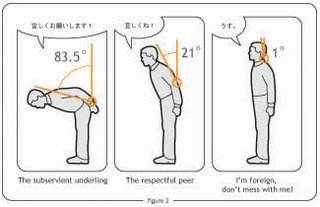
In Japan the bow is used to pay appropriate respects to whomever you are bowing to. How deep you bow, duration and regularity or refusal to actually stop bowing all show due deference to your superior. The gamesman though reverses this tactic and uses the bow to impose his perceived position on others. As a foreigner making a cultural faux pas means very little. You are not meant to understand the ins and outs of such niceties. So when you bow, bow as little as you can. Consciously the other person will see this as a failure of a non-national to understand and adhere to the rules, but subconsciously he will be put in his place (fig. 2).


Study these examples
"Mr. Gaijin-san, good morning!"
Deep bow, "Good morning, honerable colleague!"
"We have a lot of work for you to do today!"

"Mr. Gaijin-san, good morning!"
Quick nod, "Morning."
"How is sir today? I hope sir will be kind enough to consider some of our humble requests."

If at all possible the gamesman's chin must never be lower than his Adam's apple. Once you have learnt this version of the "bow", be sure to use it often so that people will think you are very polite and socially minded.

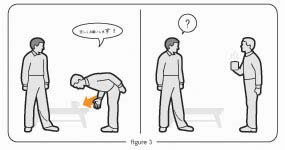
If one is forced into a show of respect to an undeserving recipient, say to someone with decisive power over your continued employment, the gamesman should combine the bow with another activity which requires the downward motion. Bow deeply but before you get up, scratch your knee, or pick up an object as if that was the reason you were down there (fig. 3). The recipient will be slightly confused as to whether you were showing him the respect he expected or not. He may feel good about himself but at the same time be unsure as to your status.

Bowing is a weapon, not a mere social nicety. The true gamesman knows this all too well and will make extensive use of it.

Gamesmanship - part 1

Gamesmanship, n. The use or practice of using dubious yet not technically illegal methods to win a game or further one's position. Origin: "Gamesmanship: The Art of Winnings Games Without Actually Cheating", by Stephen Potter, 1947.

Being a foreigner in Japan has many advantages as well as disadvantages. But with clever use of gamesmanship it is fairly easy to get your own way or further your standing in everyday life. In a series of posts I will try to explain some of the finer details of gamesmanship that professionals as well as amateurs to the sport may want to try out.

Part 1 - More polite than polite

It is a well known fact that the Japanese are considered, no less than by themselves, to be very polite. As a foreigner you are often forgiven your brash and rude ways for the level of politeness required in common situations is understandable only to the Japanese themselves. The first phrase the amateur gamesman must learn is "Tondemo arimasen!" (pronounced quickly as "Tondemarimasen!"). This phrase is accompanied by holding your open hand in front of your face, the palm towards the speaker, waving it left to right briefly (fig. 1).

Whenever a Japanese person compliments you on anything whatsoever saying the phrase and waving your hand will show them you are not only capable of brushing off compliments, but also that you can do it in the most polite Japanese way. Not only will your standing increase with the speaker, but you are almost guaranteed further compliments on your Japanese and manners. A quick and easy way for the shy or inexperienced amateur gamesman to make a good impression with the minimum of effort.